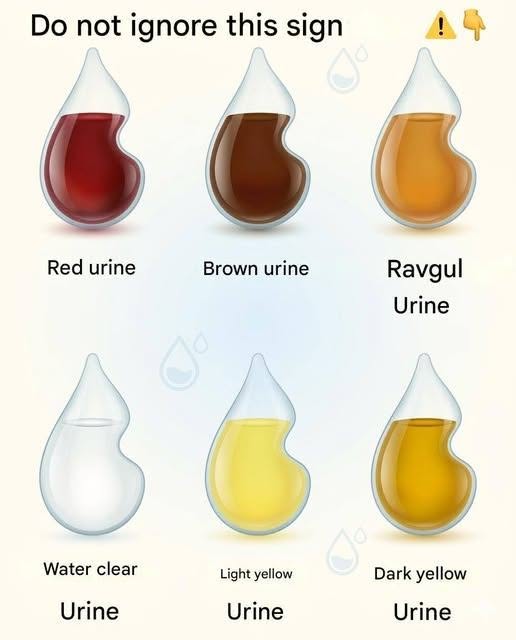
Urine color is something most people rarely think about until it suddenly changes. While occasional variations are often harmless and related to hydration, diet, or certain medications, persistent or unusual changes can sometimes provide valuable clues about your overall health.
Paying attention to urine color doesn’t replace medical care, but it can help you recognize when your body may need more fluids—or when it’s time to speak with a healthcare professional.
What Determines Urine Color?
Urine gets its normal yellow color from a natural pigment called urochrome, which is produced as the body breaks down old red blood cells.
The amount of water in your urine affects how concentrated this pigment becomes. When you’re well hydrated, urine is usually lighter in color. When you’re dehydrated, it becomes darker because it contains less water.
Clear Urine
Clear urine often indicates that you’re very well hydrated. In some cases, it may simply mean you’ve consumed a large amount of water.
However, consistently clear urine over long periods could suggest you’re drinking more fluids than your body needs. Unless advised otherwise by a healthcare provider, moderation is usually best.
Pale Yellow to Light Yellow
Light yellow is generally considered a sign of healthy hydration.
This color typically indicates that your body has a good balance of fluids and your kidneys are functioning normally.
For many healthy adults, this is the ideal urine color.
Dark Yellow or Amber
Darker yellow urine often suggests mild dehydration.
If you notice this color, try increasing your water intake, especially after exercise, hot weather, or illness involving sweating, vomiting, or diarrhea.
Urine should usually become lighter after proper hydration.
Orange Urine
Orange urine can have several possible causes, including:
- Dehydration
- Certain vitamins or supplements
- Some medications
- Foods containing artificial coloring
In rare cases, orange urine may also be associated with liver or bile duct problems, particularly if accompanied by pale stools or yellowing of the skin or eyes.
Persistent orange urine should be evaluated by a healthcare professional.
Pink or Red Urine
Red or pink urine may appear after eating foods such as:
- Beets
- Blackberries
- Rhubarb
However, it can also indicate the presence of blood in the urine.
Possible causes include:
- Urinary tract infections
- Kidney stones
- Kidney disease
- Bladder conditions
- Certain medications
Because blood in the urine can sometimes signal a serious medical condition, unexplained red or pink urine should always be assessed by a healthcare provider.
Brown urine may occur due to:
- Severe dehydration
- Certain medications
- Some foods
- Liver disorders
- Muscle injury in rare cases
If brown urine does not improve with hydration or occurs alongside other symptoms, medical evaluation is recommended.
Blue or Green Urine
Although uncommon, blue or green urine can result from:
- Certain medications
- Food dyes
- Some vitamin supplements
- Rare inherited metabolic disorders
Most cases are harmless, but unexpected color changes should be discussed with a healthcare professional if they persist.
Cloudy or Foamy Urine
Cloudy urine may sometimes occur due to dehydration or harmless crystals, but it can also be associated with:
- Urinary tract infections