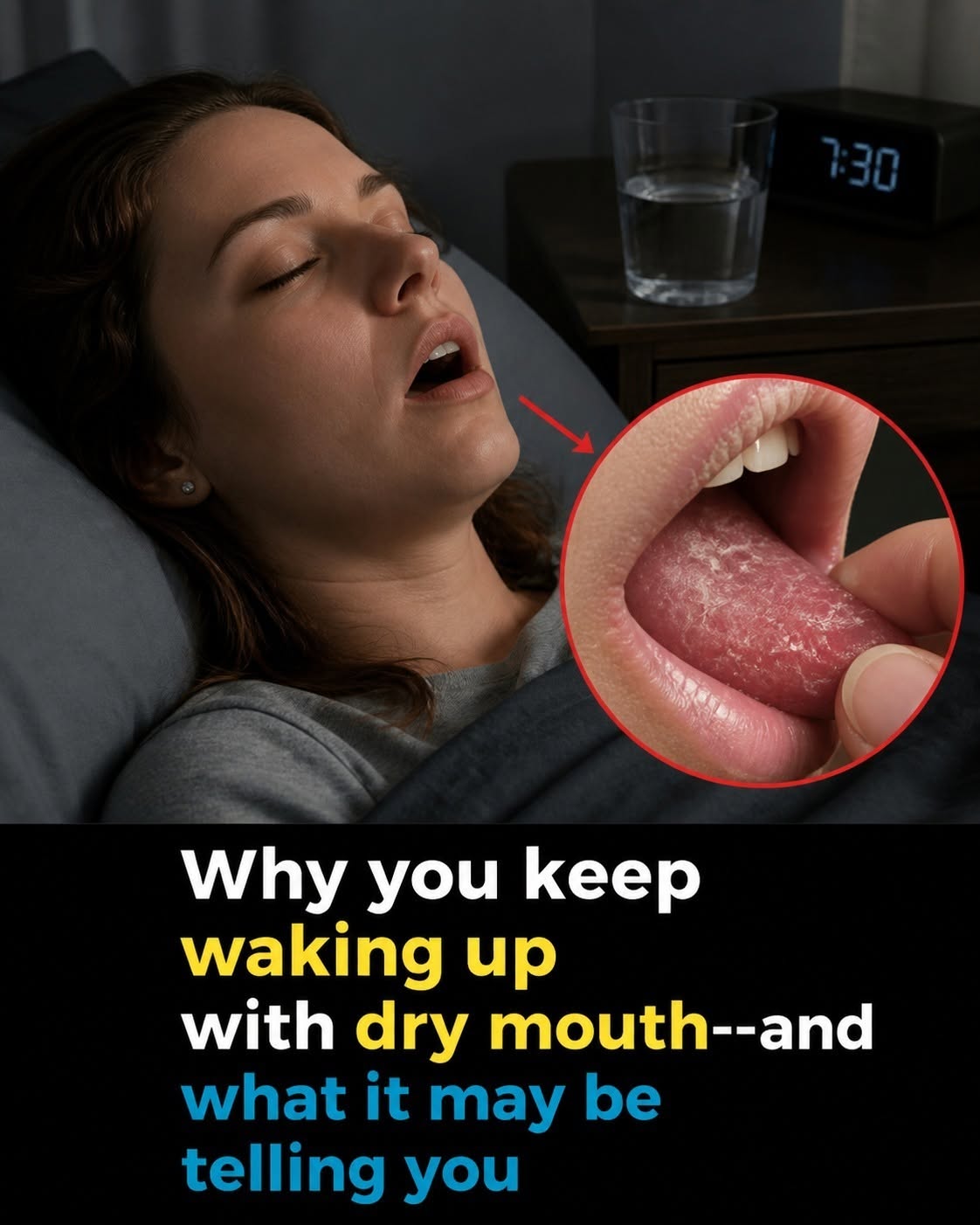
Snoring: Snoring causes the mouth to remain partially open throughout the night, accelerating oral drying. It also disturbs the natural breathing rhythm, further reducing saliva circulation in the oral cavity. Addressing snoring – through positional changes, weight management, or medical evaluation – often reduces causes of mouth dryness at night.
Sleep Apnea: Obstructive sleep apnea (OSA) is a condition in which the airway is repeatedly blocked during sleep, causing the person to unconsciously gasp and breathe through their mouth. Research indicates that over 30% of people with OSA experience morning dry mouth, compared to approximately 3% of those without the condition. If you consistently wake up with extreme mouth dryness and also experience daytime fatigue, morning headaches, or are told you snore loudly, a sleep apnea evaluation is strongly recommended.
Dehydration: Saliva production decreases as part of the body’s water conservation during sleep. If you go to bed even mildly dehydrated – which is common after exercise, alcohol consumption, or simply not drinking enough water through the day – nocturnal dryness of mouth is significantly more likely. A glass of water before bed and one kept on the nightstand can help.
Reduced Saliva Flow During Sleep: Saliva production naturally slows during sleep as part of the circadian rhythm. This is why some degree of morning dryness is normal. However, when this combines with any of the above factors, the result is pronounced xerostomia that disrupts sleep quality.
When Dry Mouth Could Signal a Bigger Problem
While occasional mouth dryness is common and manageable, persistent or severe xerostomia can sometimes be the first visible sign of an underlying medical condition. Do not ignore dryness of the tongue and mouth that is chronic, unexplained, or worsening, particularly if it appears alongside any of the following: