Female spotted wing drosophila flies have a specialized egg-laying structure that allows them to pierce the skin of ripening fruit. They may deposit eggs just beneath the surface while the berry is still growing on the plant.
After the eggs hatch, the larvae feed inside the soft fruit. Warm temperatures and humid conditions can support faster insect development.
This pest can affect several thin-skinned fruits, including:
- Strawberries
- Raspberries
- Blackberries
- Blueberries
- Cherries
- Some grapes and stone fruits
What Spotted Wing Drosophila Looks Like
Adult flies are tiny and often have red eyes and pale brown bodies. Males typically have noticeable dark spots near the tips of their wings, which is where the insect gets its common name.
Because the flies are so small, shoppers may never see the adult insects even when larvae are present inside the fruit.
Why Salt Water May Make Larvae Appear
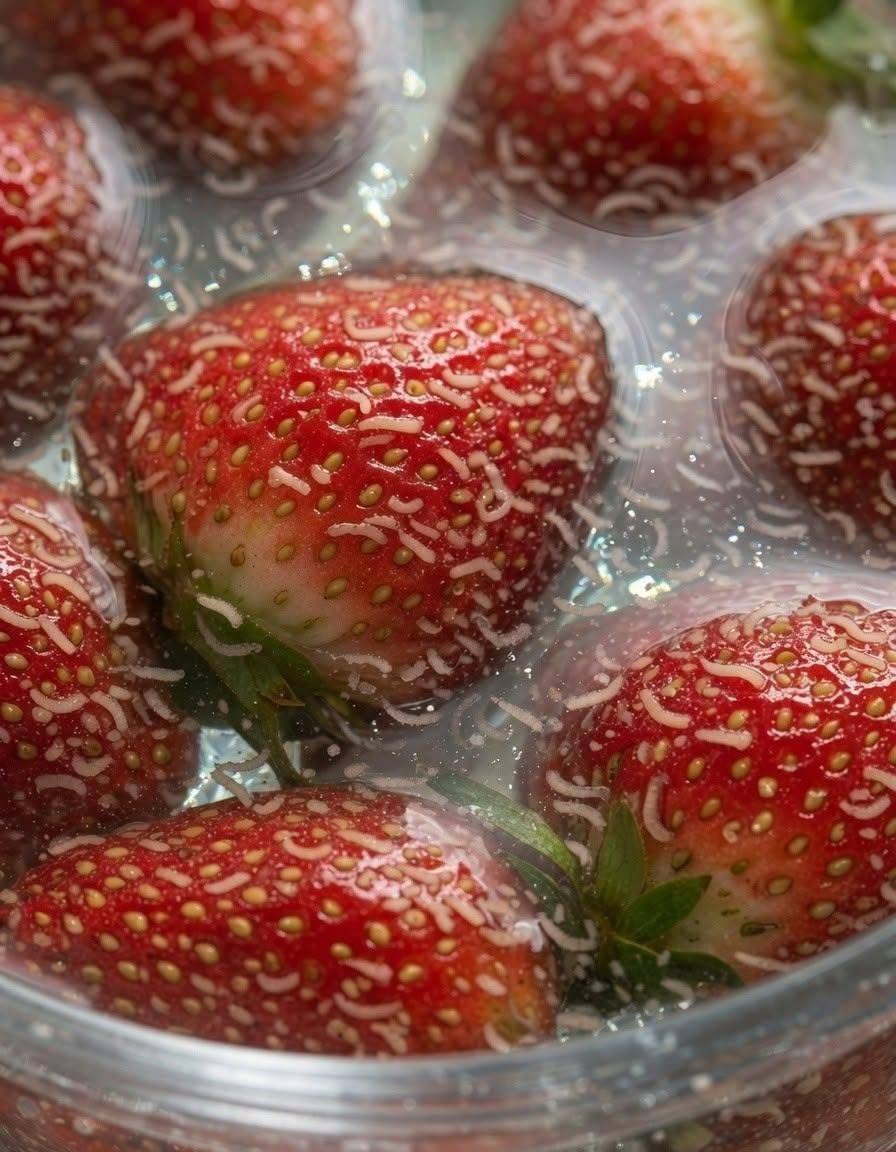
Soaking strawberries in salt water may cause some hidden insects or larvae to move out of the fruit and become visible in the bowl.
A commonly shared mixture uses approximately one tablespoon of salt per cup of cool water. The change in the surrounding environment may stress small organisms and encourage them to leave crevices or damaged areas in the fruit.
However, a salt-water soak is not a standardized food-safety test and does not guarantee that every insect, egg, microorganism, or pesticide residue has been removed.
The appearance of tiny larvae can be disturbing, but the condition of the fruit itself is just as important when deciding whether it should be eaten or discarded.
Are the Larvae Dangerous?
Accidentally consuming a small fruit-fly larva is generally not expected to cause harm in a healthy person. These larvae are not known to live or reproduce inside the human body.
However, their presence may indicate that the fruit has been damaged and could spoil more quickly. Insect-damaged berries may provide openings where yeasts, molds, or bacteria can grow, particularly if the fruit has become soft, leaking, fermented, or poorly refrigerated.
For this reason, inspect the entire berry rather than relying only on the presence or absence of visible larvae.
When Strawberries Should Be Discarded
Throw the berries away if you notice:
- Visible mold
- A sour, alcoholic, or fermented smell
- Leaking juice combined with extensive softness
- Dark, sunken areas or widespread decay
- A slimy surface
- Significant insect damage throughout the container