It was a chain of fear, ambition, silence, and people convincing themselves that the next compromise would be the last.
That made it more believable.
And, somehow, more painful.
My father’s name was publicly cleared.
Northbridge issued a formal correction. The missing funds were traced, and restitution proceedings began for the charities and medical programs affected.
Jason voluntarily stepped down from temporary control of the company while investigators reviewed his credentials. When the review confirmed he had not authorized the transfers, the board asked him to return.
He declined the position of permanent chair.
Instead, he proposed something no one expected.
He asked the board to divide authority among an independent leadership council, employee representatives, and outside ethics officers.
“No more dynasties pretending blood is a qualification,” he said during the meeting.
Vivian supported him.
It cost her three longtime board allies.
She did not hesitate.
Ethan’s recovery was slower than the headlines wanted.
Newspapers spoke of miraculous awakenings, secret marriages, and financial scandal. They did not show the mornings when he could not lift a spoon, the afternoons when speech therapy left him trembling, or the nights when fragments of the crash returned in dreams.
I remained at the estate.
At first, I told myself it was because investigators needed me nearby.
Then because Ethan’s doctors asked me to help with memory exercises.
Eventually, I stopped inventing reasons.
One evening, nearly six weeks after he woke, I found him in the conservatory.
He sat in a wheelchair beside the glass wall, watching rain collect on the garden leaves. A physical therapist had left a walking frame nearby.
“You escaped,” I said.
“Temporarily.”
His voice was still quiet, but each word came more easily now.
“Should I alert security?”
“They know.”
“That ruins the drama.”
His mouth curved.
It was the first full smile I had seen from him.
I sat beside him.
For several minutes, we listened to the rain.
Then he said, “You read the letter.”
“Yes.”
“I didn’t know what it said.”
“You carried it anyway.”
“Mara gave me the satchel before we separated that night. I put it in the locker because I realized I was being followed.”
“Why did you take the health center car?”
“Your mother told me you were scheduled to use it the next day.”
I looked at him.
“You believed someone would come after me.”
“I believed Vale thought your father had given you copies.”
“So you made yourself the target.”
“I planned to leave the car at the station and meet a security officer.”
“But Mara changed the meeting place.”
He nodded.
“She said she had proof Vale was tracking the trains. I believed her.”
“Did she betray you?”
Ethan watched the rain.
“I think she panicked. She sent me toward the mountain road, then tried to warn me after she discovered Vale had hired someone to follow the car.”
“Do you forgive her?”
His fingers rested against the blanket over his knees.
“I don’t know yet.”
It was the most honest answer he could have given.
He looked at me.
“Do you forgive your father?”
“Not all at once.”
“That sounds wise.”
“It feels messy.”
“Most wise things do.”
I smiled.
Then the question I had been avoiding rose between us.
“Why did you name me in the marriage arrangement?”
He looked away.
For the first time, Ethan Thornton appeared nervous.
“The letter was only supposed to be delivered if I remained incapacitated near my thirtieth birthday.”
“That does not answer the question.”
“No.”
He drew a slow breath.
“After I met you at the health center, I asked who you were.”
“So Vivian told me.”
“You were arguing with a pharmacist.”
“I was not arguing.”
“You threatened to call three state agencies.”
“The prescription had been approved.”
“You were terrifying.”
I tried not to smile.
He continued.
“Later, your mother told me about you. Not the dramatic things. Small things. That you took the longest route home because you liked passing a bakery that gave leftover bread to the shelter. That you pretended not to notice when your father burned breakfast because he looked proud of making it.”
My throat tightened.
“She told you that?”
“She loved talking about you.”
He turned toward the rain again.
“When I created the contingency plan, I needed someone outside the company. Someone Vale would not control. Someone Vivian could not intimidate.”
“I am not sure the last part has been proven.”
“It has.”
A laugh escaped me.
Then Ethan’s expression became serious.
“I knew the arrangement was unfair.”
“You were unconscious.”
“I made it possible before that.”
“Yes.”
“I gave instructions that you could refuse. That you would receive financial protection regardless of whether the ceremony happened.”
“My father did not mention that.”
“I know.”
He looked down at his hands.
“I am sorry, Clara.”
The apology contained no request.
No expectation that I comfort him.
Only responsibility.
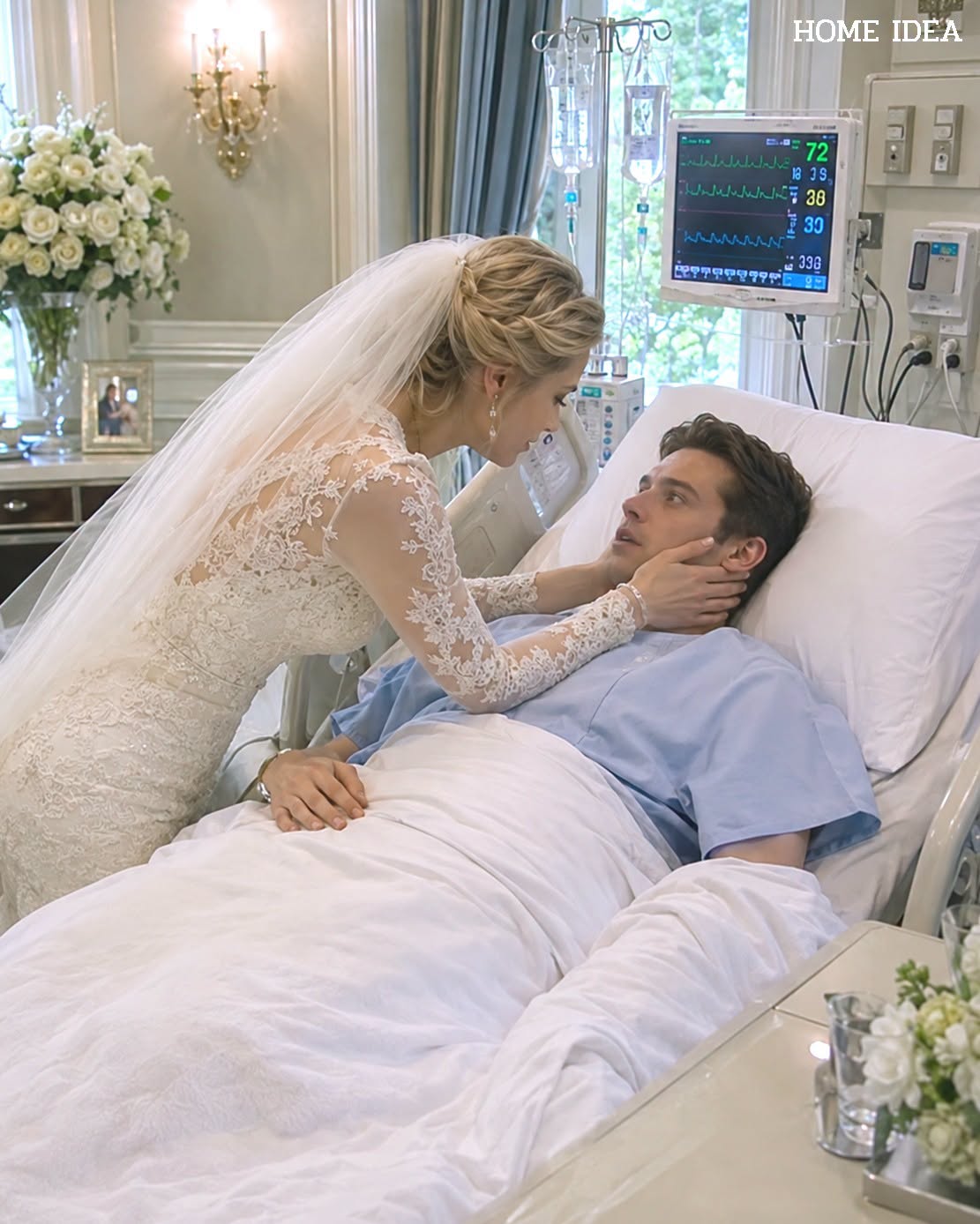
I studied the man I had first met while he lay silent beneath white sheets. The man who had chosen a dangerous road to draw attention away from someone he barely knew. The man who had built a marriage contingency out of trust, calculation, and perhaps a hope he had never expected to confess.
“What happens now?” I asked.
“That should be your decision.”
“And what do you want?”
His eyes met mine.
“A chance to meet my wife.”
The words were gentle.
Not clever.
Not demanding.
My heart moved before I could stop it.
“You have already met her.”
“No. I met a volunteer in Queens. Then I woke beside a woman who lied to a doctor because I asked her to.”
“You remembered that?”
“Every second.”
“You could barely speak.”
“I was still impressed.”
I looked away, suddenly aware of the ring on my hand.
Ethan touched it lightly.
“You are free to leave,” he said. “The trust has been amended. Your father’s debts are resolved through restitution, not through our marriage. You owe this family nothing.”
“And if I stay?”
His voice lowered.
“Then we begin again.”
A week later, Ethan walked twelve steps.
The entire family gathered in the rehabilitation room, though he had asked them not to.
Vivian stood near the wall pretending she had come to speak with the doctor. Jason leaned against the doorway with his arms folded. My father held a paper cup of coffee he never drank.
Ethan gripped the walking frame.
His therapist stood beside him.
“One step at a time,” she said.
He moved his right foot.
Then his left.
The third step made his shoulders shake.
By the seventh, sweat had gathered at his temples.
At the tenth, everyone stopped breathing.
He reached twelve and lowered himself into the chair.
Vivian turned toward the window, wiping her eyes before anyone could see.
Jason walked forward.
“You always did enjoy an audience.”
Ethan looked up at him.
“You came.”
“Only to confirm the rumors of your terrible technique.”
For a moment, the cousins regarded each other across everything that had happened.
Then Ethan held out his hand.
Jason stared at it.
“You knew I was investigating Northbridge,” he said.
“I suspected.”
“You never trusted me enough to tell me about the locker.”
“I did not trust anyone enough.”
Jason’s expression tightened.
“That is not better.”
“No.”
Ethan kept his hand extended.
“I’m sorry.”
Jason looked toward Vivian.
Then toward me.
Finally, he took Ethan’s hand.
“Your grip is weak.”
“I was unconscious for nine months.”
“Excuses already.”
But he did not let go immediately.
Three months later, the Thornton Foundation reopened the Queens health center under a new charter.
No family member held sole authority over its funds.
My father joined its financial oversight committee, working alongside outside auditors and patient advocates. He accepted the role only after I told him that clearing his name did not mean returning to the man he had been.
“You have to become someone who tells the truth before he is cornered,” I said.
He nodded.
“I’m learning.”
So was I.
Mara returned to New York and entered a cooperation agreement. She faced professional consequences and a long legal process, but her testimony protected dozens of patients whose records Vale had used as leverage.
Before her first hearing, she asked to meet me.
We sat in a small conference room with our attorneys present.
She looked older than the woman in the gala photographs.
“I have rehearsed an apology a hundred times,” she said.
“Then don’t rehearse it now.”
Her hands folded tightly on the table.
“I was afraid.”
“I know.”
“I told myself Vale would ruin the research. Then I told myself he would hurt the patients. Every time I helped him, I found a reason that made me feel less responsible.”
She looked at me.
“Your mother saw through me.”
“What did she say?”
“That courage does not arrive before the choice. It arrives because of it.”
That sounded like my mother.
Mara slid a small object across the table.
A visitor badge from the health center.
My name was printed beneath a faded photograph.
“Ethan kept this after his first visit,” she said. “It was in his office. I found it when I collected the Northbridge files.”
I picked it up.
“He kept my badge?”
“He said it reminded him that stubbornness could be useful.”
Despite myself, I laughed.
Mara’s eyes filled.
“I am sorry, Clara.”
I could not tell her everything was all right.
It wasn’t.
But I could give her something honest.
“I hope what you do next becomes larger than what you did then.”
She nodded, tears slipping down her face.
It was not absolution.
It was a door.
By spring, Ethan could walk without assistance.
On the anniversary of the day he opened his eyes, he asked me to meet him in the health center courtyard.
The garden had been restored with benches, flowering trees, and a narrow brick path winding between raised beds. Patients and families filled the windows above us.
Ethan waited beneath a young magnolia tree.
He wore a dark suit but no tie.
“You look suspicious,” I said.
“I have been told that is a family trait.”
“What have you done?”
“Something reckless.”
“That is definitely a family trait.”
He held out his hand.
I placed mine in it.
He led me toward the center of the courtyard, where a small plaque had been set into the brick path.
EVELYN BENNETT GARDEN
For Every Person Who Chose Courage Before They Felt Ready
My breath caught.
“You did this?”
“Not alone.”
My father stepped from behind the magnolia tree.
Vivian followed, carrying flowers.
Jason appeared beside them, looking annoyed at being included in anything sentimental.
Around the courtyard stood doctors, nurses, volunteers, patients, and former employees of the foundation.
Ethan turned to me.
“One year ago, a legal document declared us married.”
A murmur of laughter passed through the crowd.
He continued.
“It was practical, complicated, and completely backward.”
“That is generous.”
“I thought we could correct the order.”
He reached into his pocket.
Instead of a new ring, he removed the same simple platinum band I had worn since the first ceremony.
I looked at my empty hand.
I had taken it off that morning before work because the clasp on my bracelet had caught against it.
Or so I had thought.
“You stole my wedding ring.”
“I borrowed it with assistance.”
My father looked innocent.
Jason did not.
Ethan held the ring between us.
“Clara Bennett, I cannot promise you a life without secrets. People are too imperfect for that.”
The courtyard became quiet.
“But I promise I will never call silence protection when it is really fear. I will ask instead of assume. I will tell you the truth even when it changes how you see me.”
His voice trembled slightly.
“And I will spend every day being grateful that the first voice I heard when I returned to the world was yours.”
My vision blurred.
He lowered himself carefully onto one knee.
The movement was still difficult.
I reached for him.
“Ethan, your therapist will be furious.”
“She is standing behind you.”
I glanced back.
The therapist smiled.
“He practiced.”
When I turned again, Ethan was holding up the ring.
“Will you marry me?”
“We are already married.”
“Will you do it on purpose this time?”
Laughter broke through my tears.
I looked at my father, who was crying openly now.
At Vivian, whose hand rested on Jason’s arm.
At the garden carrying my mother’s name.
At the health center where so many lives had crossed without understanding how deeply they would one day connect.
Then I looked at Ethan.
“Yes.”
He smiled.
Not the faint almost-smile from the hospital bed.
A full, bright, astonished smile.
“Yes?” he repeated.
“Yes.”
He slid the ring onto my finger.
The courtyard erupted in applause.
But beneath the sound, I heard my mother’s words from the letter.
Our lives are not defined only by what was taken from us. They are also defined by what we choose to return to others.
Later, after the small ceremony and the photographs and Jason’s unexpectedly moving toast, I found Vivian standing alone beside the plaque.
“You knew my mother,” I said.
“A little.”
“Why didn’t you tell me?”
Vivian looked down at the flowers.
“Because she asked me not to interfere unless Ethan failed.”
“Failed at what?”
“At finding his way back.”
I stared at her.
“She knew about the marriage plan?”
“Not the details. But Ethan told her he intended to protect you if the investigation became dangerous.”
Vivian reached into her handbag and removed a folded piece of paper.
“There was one more note.”
My mother’s handwriting covered the outside.
For Vivian.
“I kept it because I did not understand it,” she said.
I opened the note.
Vivian,
Ethan believes he is protecting Clara because she reminds him that good people exist outside the world he knows.
He is mistaken.
He is protecting her because she reminds him of the person he still hopes to become.
Should he ever forget that, please return him to her.